


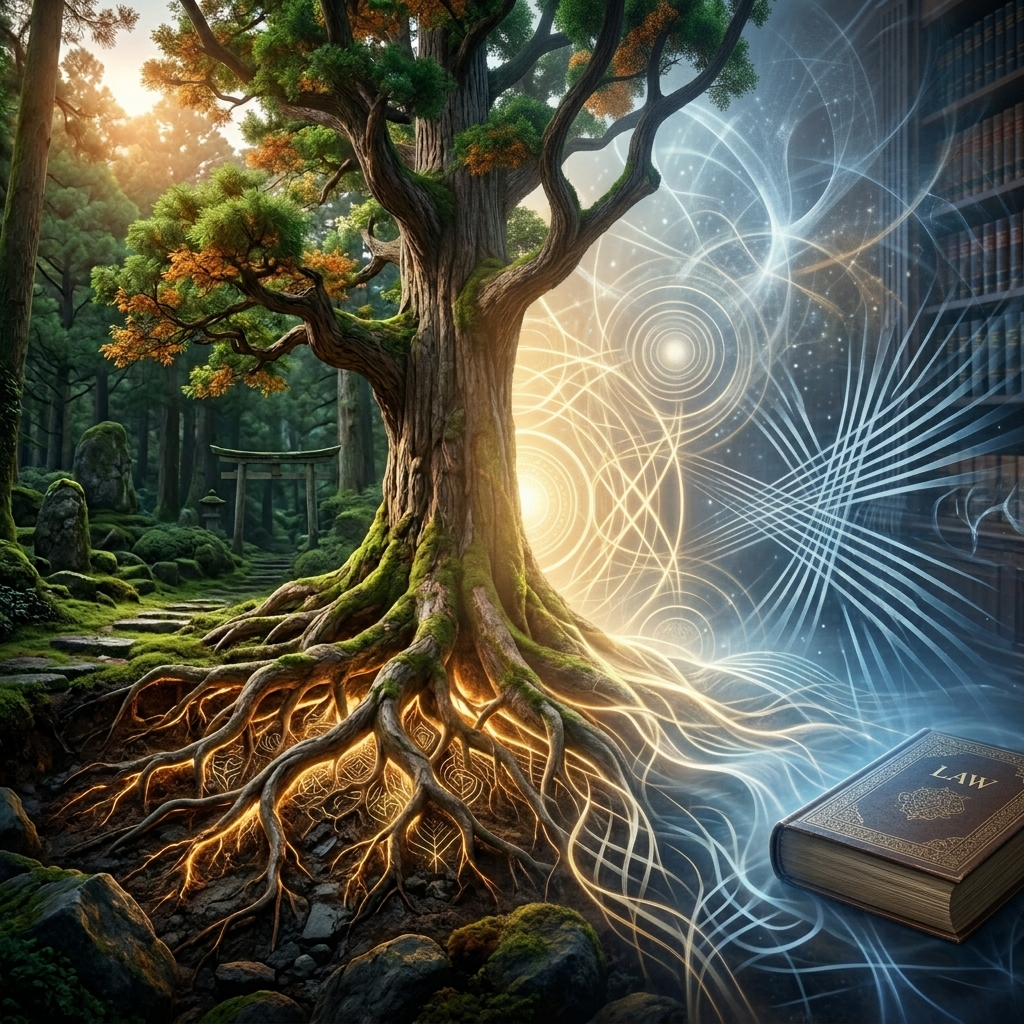
日本の「Kami」は「God」ではない:自然との調和と神道の精神
“Kami” is Not “God”: Harmony with Nature and the Spirit of Shinto
日本の文化や神話に触れる際、多くの人が日本の「神(Kami)」を英語の「God」と翻訳します。しかし、この翻訳は決定的な誤解を生む原因となります。
When engaging with Japanese culture and mythology, many people translate the Japanese word Kami as “God” in English. However, this translation leads to a fundamental misunderstanding.
なぜなら、日本の「Kami」と一神教における「God」は、根本的に異なるパラダイム(世界観)の上に成り立っているからです。日本の精神性や文化を深く理解するために、知っておくべき4つの重要なコンセプトを紹介します。
This is because the Japanese concept of Kami and the monotheistic concept of “God” are built upon entirely different paradigms. To deeply understand Japanese spirituality and culture, here are four essential concepts you need to know.
スポンサードサーチ
1. 「Kami」は創造主(Creator)ではない
1. “Kami” is Not the Creator
アブラハムの宗教(キリスト教、イスラム教、ユダヤ教)における「God」は、宇宙を無から創り出した「絶対的な唯一の創造主」であり、人間や自然界とは明確に切り離された絶対者です。
In Abrahamic religions (Christianity, Islam, Judaism), “God” is the absolute, singular Creator who forged the universe from nothing—an absolute being distinctly separate from humans and the natural world.
一方、日本の「Kami(または Divine spirits)」は、大自然そのもの、あるいは自然の法則の中に宿る霊的なエネルギーを指します。Kamiは無から宇宙を創ったのではなく、宇宙や自然の成り立ちの中から「生まれ出た存在」です。
In contrast, Japanese Kami (or divine spirits) refer to Mother Nature herself or the spiritual energy dwelling within natural laws. Kami did not create the universe from nothing; rather, they are beings that “emerged” from the formation of the universe and nature.
そのため全知全能の絶対者ではなく、時に失敗をし、人間と同じように喜怒哀楽の感情を持つ存在として神話に描かれています。
Therefore, they are not omnipotent or omniscient absolutes. In mythology, they are depicted as entities that sometimes make mistakes and possess human-like emotions—joy, anger, sorrow, and pleasure.
スポンサードサーチ
2. 自然を支配するのではなく、調和する(日本庭園に噴水がない理由)
2. Harmony, Not Domination: Why Japanese Gardens Have No Fountains
西洋の伝統的な世界観では、「神が人間のために自然を創り、人間には自然を管理・支配する権利が与えられた」と考える傾向があります。これは西洋の幾何学的な庭園によく表れています。
In the traditional Western worldview, there is a tendency to believe that “God created nature for humans, and humans are granted the right to manage and dominate it.” This is often reflected in geometric Western gardens.
庭園の中心にある「噴水(Fountain)」は、重力という自然の法則に逆らって水を空高く噴き上げさせます。これは「人間が自然の力をコントロールし、支配していることの象徴」です。
The fountain at the center of the garden forces water high into the sky, defying the natural law of gravity. This serves as a symbol of humans controlling and dominating the forces of nature.
対して、日本の神道(Shinto)のベースにあるのは「大自然への畏敬の念」です。人間は自然の支配者ではなく、広大な自然のサイクルの一部に過ぎないと考えます。だからこそ、伝統的な日本庭園には噴水が存在しません。
On the other hand, the foundation of Japanese Shinto is a profound “awe and respect for great nature.” Humans are not seen as masters of nature, but merely as a part of its vast cycle. This is precisely why traditional Japanese gardens do not have fountains.
水は重力に逆らわず、自然のままに上から下へと流れます(滝や小川)。石や木も直線に切りそろえるのではなく、自然の造形美を活かします。自然を征服するのではなく、自然との「調和(Harmony)」を目指すこと。これが日本人の精神の根底にあるものです。
Water follows gravity, flowing naturally from top to bottom (like waterfalls and streams). Stones and trees are not cut into straight lines; instead, their natural, sculpted beauty is embraced. The goal is not to conquer nature, but to achieve “harmony” with it. This lies at the very root of the Japanese spirit.
スポンサードサーチ
3. 神道(Shinto)は宗教ではなく「生き方」
3. Shinto is Not a Religion, but a “Way of Life”
神道には、絶対的な「教典(聖書やコーラン)」や開祖、そして守るべき厳格な「戒律」が存在しません。そのため、西洋の基準で神道を Religion(宗教)という枠に当てはめようとすると矛盾が生じます。
Shinto has no absolute scriptures (like the Bible or the Quran), no founder, and no strict commandments to obey. Therefore, attempting to fit Shinto into the Western framework of a “Religion” leads to contradictions.
神道は、体系化された宗教というよりも、Way of life(生き方・マインドセット)です。日々の自然の恵みに感謝し、身の回りを清潔に保ち、心が曇ったとき(穢れ)は水で洗い流す(祓い)。
Rather than a systematized religion, Shinto is a “Way of life” or mindset. It involves giving thanks for nature’s daily blessings, keeping one’s surroundings clean, and washing away impurities with water (Harai) when the mind becomes clouded (Kegare).
この「清らかで明るい心」を保ち、大自然や他者と調和して生きることそのものが、神道の実践なのです。
Maintaining this “pure, bright, and honest heart” and living in harmony with nature and others is the true practice of Shinto.
スポンサードサーチ
4. 「ウシハク(支配)」と「シラス(統合)」:日本に革命がない理由
4. “Ushihaku” and “Shirasu”: Why Japan Has No History of Revolution
日本の歴史と国家の根幹には、西洋とは全く異なる独自のコンセプトが存在します。権力のあり方を示す、二つの明確な対立概念です。
At the core of Japanese history and statehood lies a unique concept, entirely different from the West. These are two distinct, opposing concepts regarding the nature of power:
-
ウシハク(Ushihaku): 土地や人民を「私有財産」として所有し、武力や絶対的な権力によって上から支配(Dominate)すること。西洋の絶対王政や独裁体制に近しい概念です。
Ushihaku (Domination): To own land and people as “private property” and to dominate them from above through military force or absolute power. This is similar to the concept of Western absolute monarchy or dictatorship.
-
シラス(Shirasu): 力で支配するのではなく、人々の心や思いを深く理解し(知る)、神の意思と一つになって国を統合すること。
Shirasu (Integration): Derived from the verb “to know.” It is not ruling by force, but deeply understanding the hearts and thoughts of the people, integrating the nation in unity with the divine will.
日本の歴史において、初代の神武天皇から現在の天皇陛下に至るまで、その統治の根本は「シラス」にあります。天皇は民を力で私物化・支配(ウシハク)するのではなく、祈りと共感によって民と調和してきました。
In Japanese history, from the first Emperor Jimmu to the current Emperor, the foundation of governance has always been “Shirasu.” The Emperor has never privatized or dominated the people by force (Ushihaku); instead, he has harmonized with them through prayer and empathy.
日本の統治の根底には、そもそも「支配(Domination)」という概念が存在しません。そのため、日本の歴史には、権力者から血を流して自由を勝ち取るための「革命(Revolution)」や「階級闘争」が存在しないのです。
The very concept of “domination” does not exist at the root of Japanese governance. Therefore, in Japanese history, there is no “Revolution” or class struggle to overthrow rulers and shed blood to win freedom.
過去から現代に至るまで、日本の社会構造に対して西洋型の「支配者と被支配者(抑圧者と犠牲者)」という枠組みをそのまま当てはめて語ることは、この「シラス」という国体の本質を知らない無知からくる大きな誤りです。
From the past to the present day, applying the Western framework of “rulers and ruled” (oppressors and victims) directly to the Japanese social structure is a gross misunderstanding born of ignorance regarding the essence of Shirasu.
この歴史的背景は、言葉の認識にも如実に表れています。英語には、状態としての自然な自由である「Freedom」と、闘争や流血によって権力者から勝ち取った自由である「Liberty」という明確な区別があります。しかし日本人は、この二つの違いを直感的に理解できず、どちらも同じ「自由(Jiyuu)」と翻訳してしまいます。
This historical background is vividly reflected in language perception. In English, there is a clear distinction between “Freedom” (a natural state of being free) and “Liberty” (freedom won from an authority through struggle or bloodshed). However, Japanese people often struggle to intuitively grasp the difference between these two, translating both simply as “Jiyuu” (自由).
なぜなら、権力者と闘って「Liberty」を奪い返すという歴史的経験(必然性)を、日本人は持つ必要がなかったからです。これこそが、日本が力による支配ではなく、祈りと調和によって成り立ってきた国であることの何よりの証拠なのです。
This is simply because the Japanese people never needed the historical experience—or the necessity—of fighting an oppressor to reclaim their “Liberty.” This fact stands as the ultimate proof that Japan is a nation built not on dominance by force, but on prayer and harmony.
結び
Conclusion
日本の精神性は「自然や他者を征服・支配する」のではなく、「一部として調和して生きる」という世界観に基づいています。
Japanese spirituality is based on a worldview of “living in harmony as a part of the whole,” rather than “conquering and dominating nature or others.”
翻訳によって生じる「God」や「Liberty」といった西洋的概念のフィルターを外し、この根本的なOS(オペレーティングシステム)の違いを知ることこそが、真の日本文化の姿に触れる第一歩となります。
Removing the filters of Western concepts like “God” and “Liberty”—which arise merely from translation—and understanding this fundamental difference in our “operating systems” is the first step toward experiencing the true face of Japanese culture.